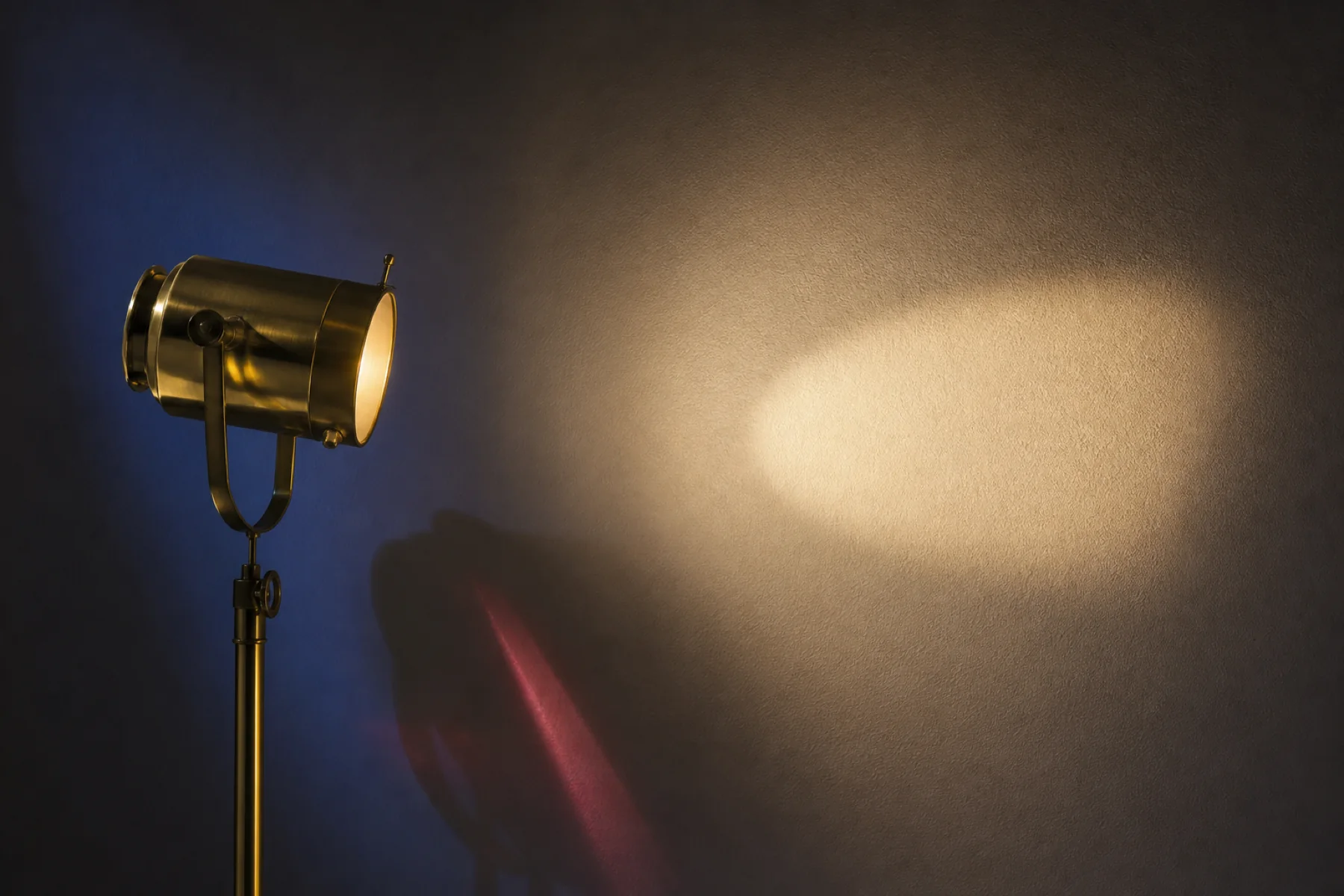
Artwork lighting has two jobs that can pull in opposite directions. It should reveal the work clearly, yet protect a physical object whose colours and materials can be changed by too much light. The best home display is therefore not the brightest one. It is a controlled layer of light that makes looking easy without turning the wall into a stage.
Start with the artwork rather than the fitting. A textured canvas, a glazed fine art print and a dark painting each respond differently. Before buying a picture light or spotlight, note the medium, surface, frame, wall position and daylight already reaching the room.
Protect the work from daylight first
Direct sunlight is not an art light. It is intense, changes throughout the day and contains ultraviolet radiation that can contribute to fading and discolouration. Damage from light is cumulative and cannot be reversed by dimming the room later. Works on paper, photographs, textiles and some pigments are especially light-sensitive, but no cherished artwork benefits from hours of direct sun.
Watch the wall from morning to evening before hanging. A place that seems shaded at noon may receive a sharp beam at five. Choose an interior wall or use blinds, curtains or UV-filtering glazing as added protection. Filtering helps, but it does not make prolonged strong light harmless. If the room is very bright, rotate vulnerable works and keep exposure hours reasonable.
These precautions belong beside stable temperature, humidity and careful handling. The guide to caring for original art at home covers the wider environment.
Why LED lighting is usually the practical choice
For most homes, a good-quality LED is a sensible starting point because it produces little ultraviolet radiation and much less radiant heat at the artwork than older incandescent or halogen sources. That does not mean every LED is suitable. Look for a dimmable fixture with a stable beam and an excellent colour rendering specification so reds, skin tones, blues and golds do not appear flattened or strangely shifted.
A high colour rendering index — commonly described as CRI 90 or above — is useful, but the final test is visual. Compare the work under the proposed lamp and in neutral daylight. If one colour becomes dominant or the surface looks lifeless, try another source. For irreplaceable, unusually fragile or historically important material, ask a conservator for advice specific to the object.
Choose colour temperature for the work and room
Colour temperature is expressed in kelvins. Warm white light around 2700–3000 K often sits naturally in living rooms and can be sympathetic to earth, red and gold palettes. A more neutral 3500–4000 K may keep whites, blues and graphic contrasts crisper. There is no single correct number: the goal is faithful colour and harmony with the room's other lighting.
Avoid mixing very warm and very cool sources on the same piece. The competing casts can divide the image and make neutral areas appear coloured. If several works share a wall, use lamps with the same colour temperature and similar colour rendering so the display feels intentional.
Light should reveal the artwork's decisions, not replace them with its own drama.
Place the beam to control glare and shadow
A ceiling-mounted adjustable spotlight is flexible and keeps hardware away from the frame. As a practical starting point, aim the beam at roughly a 30-degree angle from the wall, then adjust while standing at normal viewing distance. A steeper beam may cast a long frame shadow; a shallower one can create glare or shine into the viewer's eyes.
For a textured painting, slightly angled light lets relief create small shadows and makes the surface legible. Too much side light can exaggerate every ridge, while a source directly above may leave the lower half dull. Broad, even illumination is often calmer for large canvases. Two overlapping beams can help a wide work, provided they match and do not create a bright seam.
Glazed prints need special attention. Move around the room and check reflections from seated and standing positions. Re-aiming the lamp, changing its height or using conservation-grade anti-reflective glazing can be more effective than increasing brightness. When planning the full display, coordinate the light with the guidance on how high to hang art.
Picture lights, spotlights and wall washing
Picture lights
A frame-mounted or wall-mounted picture light creates intimacy and works well when one piece has a permanent location. Choose a fitting wide enough to spread light across most of the image and position it so heat is not trapped near the surface. Battery models are convenient, but check that dimming, colour quality and run time are consistent.
Adjustable spotlights
Track heads and recessed adjustable spots are useful for changing collections. They allow the beam to follow a newly hung work without rewiring. Select a beam spread that covers the artwork rather than making a small bright circle at its centre.
Wall washing
A wall wash treats art as part of the architecture. It is the quietest option for a salon wall or a room with several works, because it reduces the hierarchy between individual pieces. Evenness matters: a visibly scalloped wall can compete with the images.
Set brightness by eye, then reduce it
Begin with the room's ambient lighting at its normal evening level. Add the art light until the work reads clearly, then dim it slightly. Excessive contrast between a brilliant artwork and a dark room causes visual fatigue and makes the display feel commercial. The piece should be a focal point, not a luminous rectangle.
Use a dimmer and switch the dedicated light off when nobody is viewing the work. This reduces cumulative exposure and energy use. Museum illumination limits are useful professional references, but they depend on material sensitivity and measured exposure; copying one number without understanding the object is not a conservation plan.
A simple setup checklist
- Observe daylight on the wall across the whole day and avoid direct sun.
- Choose a dimmable, high-colour-rendering LED with a consistent colour temperature.
- Cover the artwork evenly without spilling a distracting pool far beyond it.
- Check glare and frame shadows from every normal viewing position.
- Keep fixtures and transformers from heating the artwork or frame.
- Switch display lights off when the room is not in use.
Light is part of the relationship between a room and a work. It can deepen black, wake a metallic surface and let brushwork become visible — but restraint keeps that encounter honest. Explore available MARIEZAL originals and signed fine art editions; for material details or display guidance for a particular work, contact the studio.