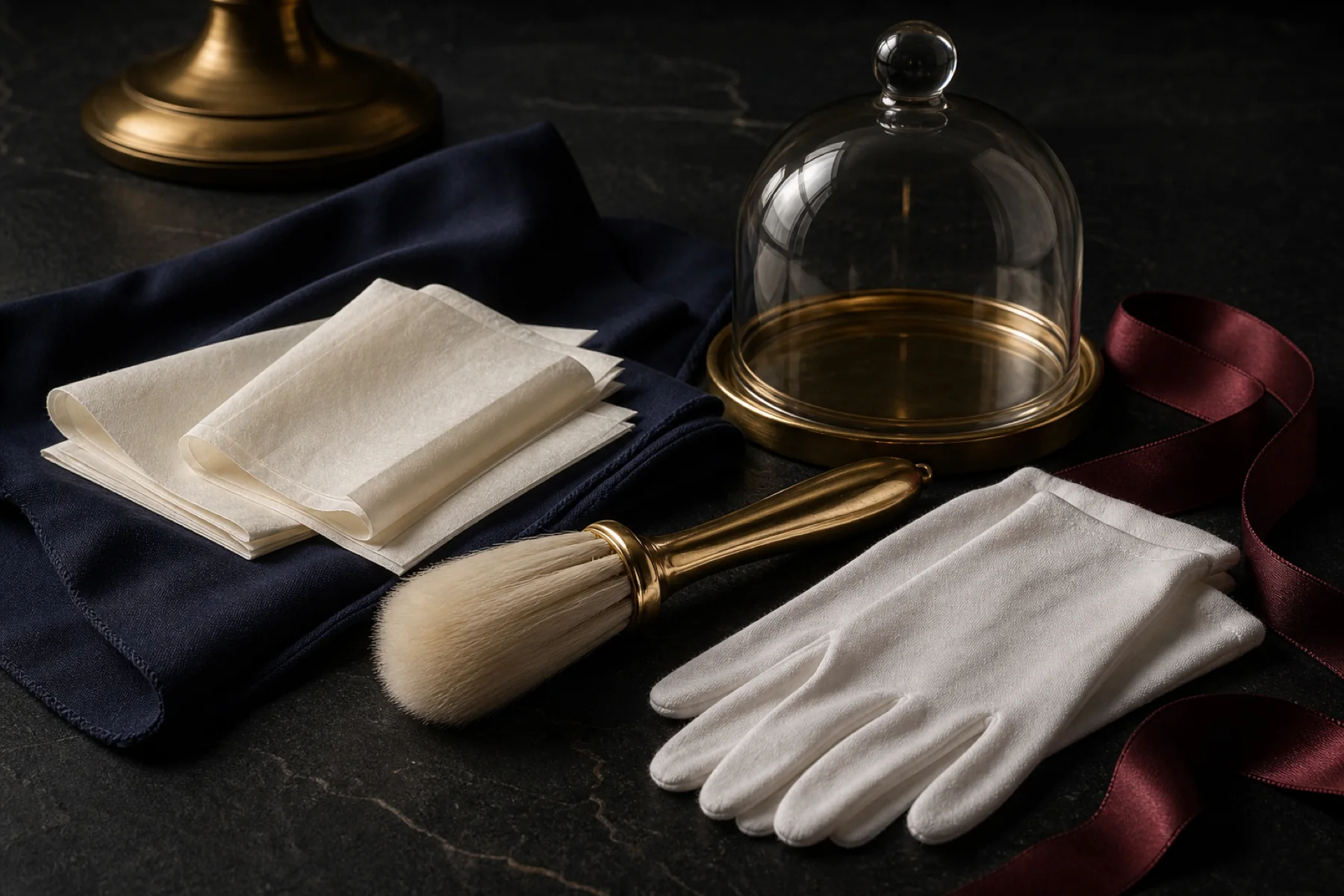
Original art is made to be lived with, not sealed away from ordinary life. Yet a few ordinary forces — direct sun, damp air, heat, dust and careless handling — can cause gradual change long before damage feels urgent. The most effective care is preventive: choose a stable place, touch the work as little as possible and keep a clear record of its condition.
Materials respond differently. Oil, acrylic, paper, wood, metallic leaf, collage and found objects do not share one cleaning method or ideal enclosure. Always keep the artist's instructions, and consult a qualified conservator when the medium or condition is uncertain.
Keep art out of direct sunlight
Light damage is cumulative and cannot simply be cleaned away. Direct sun can fade pigments and paper, yellow varnish or supports, and heat one side of a work unevenly. Place art where no beam of sunlight crosses it during the day; check at different hours and seasons because the path of the sun changes.
Use low-heat LED lighting positioned far enough away that the surface does not become warm. UV-filtering glazing and window film can reduce exposure, but they do not make a sunlit wall harmless. Works on paper, photographs and some organic or modern pigments can be especially light-sensitive.
Choose stability over a perfect number
Rapid changes in temperature and relative humidity make materials expand and contract at different rates. Over time, this movement can encourage warping, slack canvas, lifting paint, cracks or mould. A comfortably conditioned living space with gradual seasonal change is generally safer than a room that swings between damp and dry.
Avoid hanging valuable art beside radiators, fireplaces, heating vents, air conditioners or frequently opened exterior doors. Bathrooms, kitchens, garages, attics and basements introduce moisture, heat, fumes or larger fluctuations. An exterior wall that feels cold or damp may also create a risky microclimate behind the frame.
The best environment is not dramatic: no hard sun, no sudden heat, no damp corner and no reason for the surface to be touched.
Do not clean the painted surface by instinct
Household cleaners, water, solvents, oils and “restoration” products can dissolve, stain or leave residues on an artwork. Even a soft cloth can catch raised paint, push dirt into texture or burnish a matte surface. Never spray cleaner near an unglazed work, and do not use bread, potatoes, baby wipes or other online remedies.
Dust the frame and surrounding shelf with a clean, dry microfibre cloth while protecting the artwork from contact. For the art surface itself, follow the artist's written guidance. If no guidance exists, leave it alone until a conservator can identify the materials and recommend a method. Do not remove yellowed varnish, flatten lifting paint or retouch a loss yourself; those are conservation treatments, not housekeeping.
Handle from the structure, never the surface
Remove jewellery that could scratch the work and clear the route before lifting it. Use two people for anything large, heavy, glazed or awkward. Hold a framed piece with one hand on each side or beneath the lower edge; never carry it by the hanging wire, frame ornament or top alone. Keep fingers away from the image, canvas and back.
Set the work upright on clean padded blocks rather than directly on the floor. Do not lean the image against a sharp object or place a painting face-down. When moving between locations, protect corners and the face with conservation-appropriate packing that does not stick to the surface. Bubble wrap should not press directly against paint because its pattern can mark softened or textured material.
Use framing and hardware that protect the work
Hanging hardware must match the artwork's weight, frame and wall type. Two secure points can reduce tilting, and locking or seismic hardware is wise in earthquake-prone homes. Avoid adhesive strips for valuable work unless the artist or a professional installer has confirmed the complete system is suitable. Read the practical guide to hanging art safely and at the right height before choosing a position.
Works on paper and fine art prints usually need acid-free, archival matting or mounting and glazing that does not touch the image. A frame shop experienced with art can recommend UV-filtering acrylic or glass, spacers and a sealed backing. Glazing protects from dust and handling, but moisture trapped inside a frame is still dangerous.
Give textured and mixed-media works extra space
Raised surfaces create shadows and changing light, but their edges can be fragile. Do not brush across impasto, metallic leaf, collage or embedded objects unless the artist has specifically approved it. Keep them away from narrow passages where clothing, bags or furniture may graze the surface. The essay on texture in contemporary art explains why those material differences are part of the work, not imperfections to smooth away.
Sculpture and altered objects also need material-specific care. Wood responds to moisture; metal can tarnish or corrode; mixed-media adhesives may age unpredictably. Support a sculpture from its strongest structural point, not a projecting arm or detail, and ask before applying wax or polish.
Store art as carefully as you display it
If a work must come off the wall, store it in a clean, dry, conditioned room away from pipes and exterior doors. Keep framed works vertical with rigid dividers and padding between frames. Raise them off the floor in case of leaks. Do not stack canvases flat or allow hanging hardware from one work to press into another.
For more than a short interval, ask a professional art handler or conservator about wrapping and storage materials. Plastic can trap condensation, and acidic cardboard can discolour paper over time. Label the outside of each protected work so it does not need to be unwrapped repeatedly.
Create a simple condition record
When an artwork arrives, photograph the front, back, edges, signature, frame and any existing marks in even light. Save the invoice, certificate of authenticity, medium, dimensions, artist's care notes and shipping documents together. Once or twice a year, compare the work with those photographs without removing it from the wall unnecessarily.
Look for new cracks, flaking, bulges, stains, mould, insect activity, loose framing, fading or a change in tension. A little dust is not an emergency; active paint loss or moisture is. If the surface is lifting, do not touch it. Move people and vibration away from the area and contact a qualified conservator for advice.
Ask before a small problem becomes a treatment
Preventive care should be simple. If it requires liquid, pressure, adhesive, paint or a confident guess, stop. A conservator can distinguish harmless ageing from active damage and document any treatment so the history of the object remains clear.
When considering an available MARIEZAL original, ask for the exact medium, dimensions and display requirements before planning the room. For care instructions relating to a work you own — or detailed photographs before a purchase — contact the studio. The goal is not to keep art untouched by time. It is to let time belong to the work rather than to preventable damage.