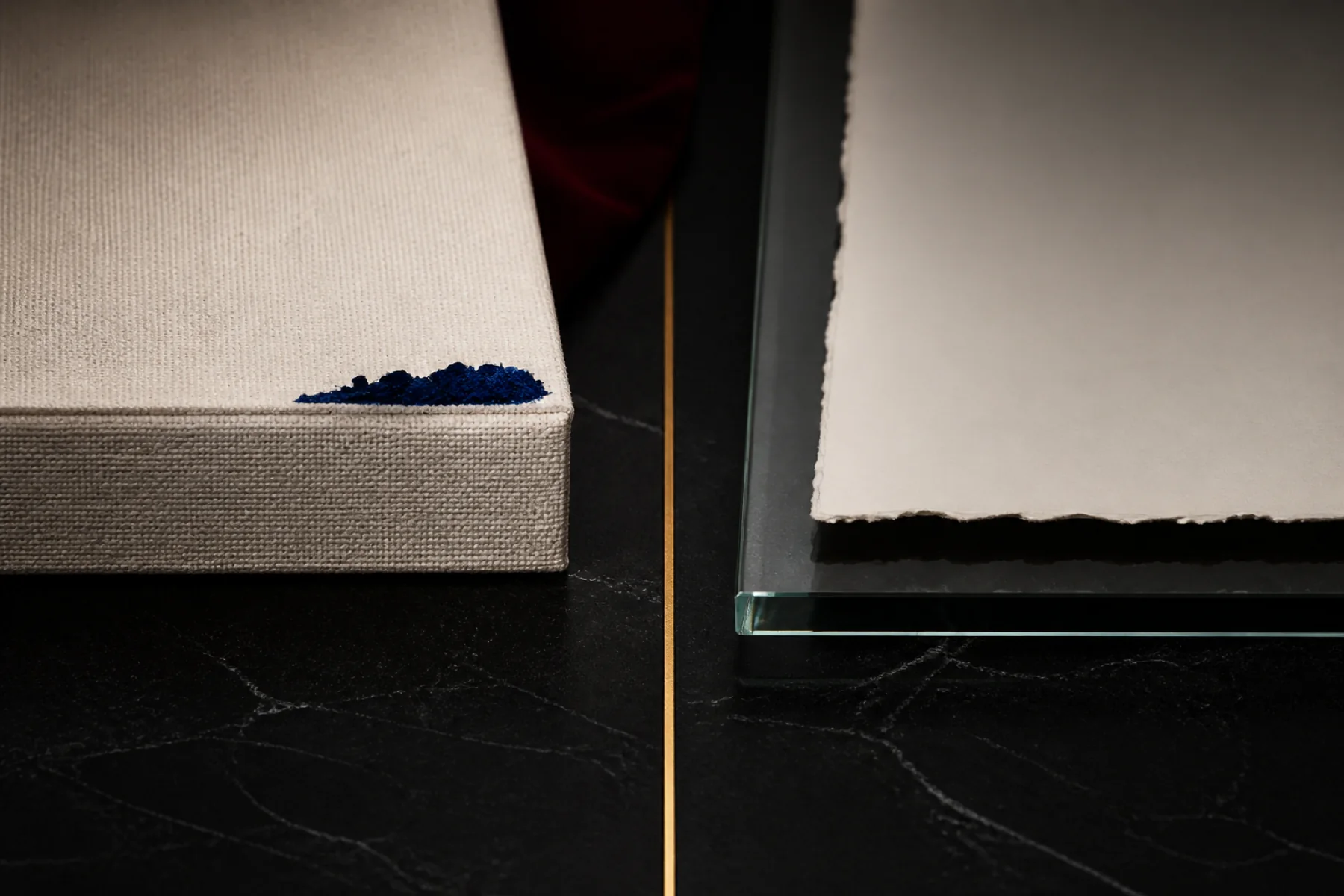
The choice between an original artwork and an art print is not a test of how serious a collector you are. It is a question of relationship. Do you want the singular object on which the artist worked, with every ridge and revision intact? Or do you want a carefully made edition that brings the same image into your home at a more accessible price?
Both can be meaningful. What matters is understanding what is being offered, how it was made and whether its value matches your reasons for buying.
What counts as original art?
An original is the unique work made by the artist: the painted canvas, drawing, sculpture or altered object itself. In a painting, the surface may show changes of mind, brush pressure, embedded material and variations in sheen that exist nowhere else. There is only one physical work, even if its image later appears in a print edition.
Original art usually costs more because it is unique and carries the full material history of its making. That does not guarantee future financial appreciation; art should never be presented as a certain investment. It does mean that no other collector can own that exact object.
What is an art print?
“Print” describes several different things, so the details matter. A fine art reproduction is created from a high-resolution image of an existing artwork, often using archival pigment inks on cotton paper. A print can retain colour, composition and atmosphere beautifully, but it does not reproduce the original's physical relief or changing reflections.
Limited editions
A limited edition has a declared maximum quantity. Each impression is usually numbered — for example, 7/50 means the seventh print in an edition of fifty — and may be signed by the artist. Ask whether artist's proofs are additional to the numbered edition and whether other sizes are produced from the same image. A certificate should identify the artist, title, medium, paper, dimensions and edition number.
Open editions and posters
An open edition has no fixed production limit. It can still be attractive and well printed, but scarcity is not part of what you are buying. A poster is generally produced as a decorative or informational item rather than as a collectible fine art edition. The words “giclée” or “fine art print” describe a printing approach or market category; by themselves, they do not prove quality, rarity or authenticity.
An original gives you the artist's surface. A print gives you access to the image. Neither choice is lesser when it is chosen honestly.
Five differences that matter in a room
1. Surface and light
Original paintings reveal themselves as the light changes. Raised marks cast shadows; matte and metallic passages move in and out of attention. A print has a flatter, more consistent surface. If material presence is the reason you stopped in front of the work, view the original in person or request detailed side-lit photographs and video before deciding.
2. Scale and availability
The original exists at one size. A print may be available in several sizes, making it easier to fit a particular wall. Confirm whether the listed dimensions describe the image, the paper or the framed work, and leave room for matting and a frame.
3. Price and framing
Compare the complete cost rather than the artwork price alone. An unframed work on paper will need archival mounting and glazing. A stretched canvas may be ready to hang or may benefit from a frame. Shipping and insurance can also differ substantially by size and material.
4. Care
Works on paper generally belong behind protective glazing and away from moisture. Paintings should also be kept out of direct sunlight and away from strong heat or humidity changes. Ask for medium-specific care instructions, especially when a work includes collage, metallic leaf or an unusual support.
5. Rarity and provenance
For an original, keep the invoice and certificate of authenticity together. For a limited print, keep the edition information as well. These records establish what you bought and where it came from; they are more useful than vague claims that something is “collectible.”
Choose an original when…
An original work may be right when the physical surface is central to your connection, you want a singular object, the scale suits your space and the purchase fits comfortably within your budget. It can become the visual anchor of a room and a direct record of one artist's hand.
Choose a print when…
A fine art print may be right when you love a particular image, need a different size or want to begin collecting at a more accessible price. A signed, numbered edition with clear materials and documentation offers a thoughtful middle ground between a unique original and mass-produced décor.
Questions to ask before you buy
Before paying, ask for the exact medium, dimensions and condition; whether the work is unique, limited or open edition; what is included with the purchase; and how it will be packed, insured and delivered. For prints, ask about the paper, ink, edition size, signature and framing. For originals, request photographs that show the edges and surface as well as the full composition.
Then return to the less measurable question: which version would you still want to encounter on an ordinary morning? If you need help comparing an original with its edition, contact the studio for availability and precise specifications. For a broader room-and-budget checklist, continue with the guide to choosing original art for your home.